

A bright orange juice can feel like a fresh start. A deep green one can feel like a commitment. But fruit juice versus vegetable juice is not really a contest between ‘good’ and ‘bad’. The more useful question is what each juice brings to your day, your appetite and your reason for resetting your habits.
If you are considering a juice cleanse, this distinction matters. Fruit and vegetables both provide vitamins, minerals and plant compounds, yet their natural sugar content, flavour and effect on fullness can be quite different. Knowing how to balance them helps you choose juices you will genuinely enjoy and a routine you can approach with realistic expectations.
Fruit juice versus vegetable juice: the key difference
The most obvious difference is sweetness. Fruit contains naturally occurring sugars, so juices made largely from apple, pineapple, orange, mango or grapes usually taste sweeter and provide more carbohydrate per glass than juices based mainly on cucumber, celery, leafy greens, tomato or courgette.
That does not make fruit something to avoid. Fruit also supplies valuable nutrients, including vitamin C, folate and potassium, depending on the variety. Its sweetness can make a juice cleanse feel more approachable, especially if you are used to sugary drinks or find green vegetables challenging. A little apple or pear can soften a juice with kale, spinach, lemon and ginger without making it taste like a dessert.
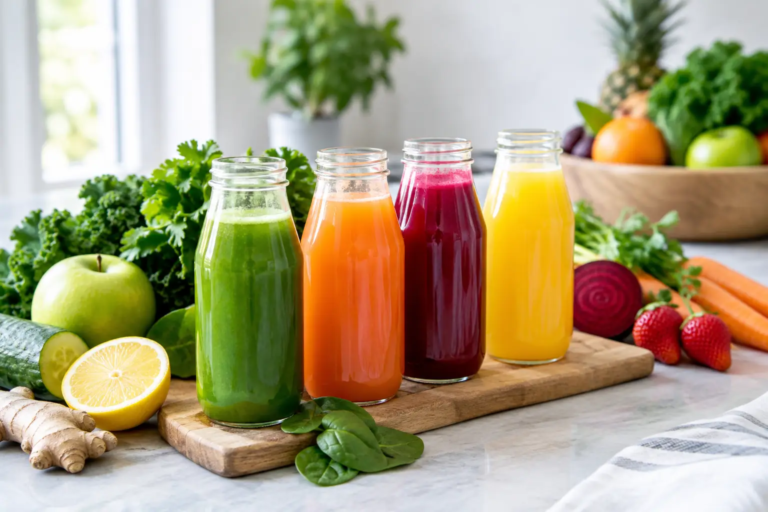
Vegetable-led juices tend to be less sweet and can be a useful way to increase variety in your intake of vegetables. They may feature ingredients such as beetroot, carrot, cucumber, fennel, celery and leafy greens. Carrot and beetroot are naturally sweeter vegetables, while cucumber, leafy greens and celery create a fresher, more savoury profile.
The right choice depends on the rest of your day, your personal taste and your goal. If a very green juice leaves you reaching for biscuits an hour later, a more balanced recipe may serve you better. If a fruit-heavy juice makes you feel overly hungry or causes an energy dip, shifting towards vegetables may feel steadier.
Natural sugar needs context
It is easy to see the word ‘sugar’ and assume fruit juice is automatically unhealthy. Context matters. The sugars in fruit occur naturally alongside vitamins and phytonutrients. However, juicing removes most of the fibre that slows eating and supports fullness when you eat whole fruit.
That is why drinking a large glass of fruit juice is different from eating an apple. You can consume the juice of several fruits quickly, without the chewing and fibre you would get from the whole pieces. For everyday drinking, portions and frequency are worth considering. In the UK, official guidance generally recommends limiting fruit juice and smoothies to a combined 150ml a day with a meal, partly because of free sugars and dental health.
During a structured, short-term juice cleanse, juices have a different role: they are planned as temporary nourishment rather than an add-on to a usual diet full of snacks and meals. That still does not mean more fruit is always better. A thoughtful balance of fruit and vegetables can keep flavours enjoyable while avoiding a day made up entirely of very sweet drinks.
If you have diabetes, take medication that affects blood glucose, are pregnant or breastfeeding, have a history of disordered eating, or manage a medical condition, seek personalised advice from a qualified healthcare professional before trying a juice cleanse. A cleanse is not a medical treatment, and it is not suitable for everyone.
What happens to fibre when you juice?
Whole fruit and vegetables are a strong foundation for daily nutrition because they contain fibre. Fibre supports normal digestion, helps you feel satisfied after meals and contributes to a varied diet. Most conventional juicers separate much of the pulp from the liquid, so juice usually contains far less fibre than the whole ingredients.
This is not a reason to dismiss juice altogether. Fresh juice can be a convenient, enjoyable way to include a wider range of produce, particularly for people who struggle to eat vegetables consistently. But it is a reason to keep perspective. Juice is best seen as one part of a healthy pattern, not a replacement for every whole fruit, vegetable and balanced meal long term.
After a cleanse, returning to fibre-rich foods gradually is often a sensible move. Think vegetables, fruit, oats, beans, wholegrains, nuts and seeds, in portions that feel comfortable for you. Your digestion may respond differently after several days of liquids, so slow, simple meals can feel more supportive than jumping straight into a large takeaway.
How to build a better balance of flavour
A juice you dread will not become a healthy habit. The most satisfying approach usually combines vegetable volume with enough fruit or naturally sweet vegetables to make the flavour bright and drinkable.
For example, cucumber, spinach, lemon and ginger have a sharp, clean taste that a small amount of apple can round out. Carrot works well with orange and turmeric, while beetroot can bring an earthy sweetness to a juice with celery, lemon or berries. These are flavour ideas, not rules. Your preferences matter, and they often change as your palate becomes less used to intensely sweet foods.
Be aware that some ingredients do not suit everyone. Large amounts of celery may be unappealing if you are sensitive to its strong flavour. Beetroot can temporarily turn urine or stools pink or red, which is typically harmless but can be surprising. Citrus can be uncomfortable for people prone to reflux. If you are taking medicines, ask a pharmacist or clinician whether specific ingredients, including grapefruit, need to be avoided.
Which is better for energy and cravings?
No juice can guarantee stable energy, weight loss or freedom from cravings. Your sleep, stress, activity level, usual eating habits and overall intake all play a part. Still, many people find that a fruit-and-vegetable blend feels more satisfying than either extreme.
Fruit can offer a welcome lift in flavour and carbohydrate, which may be especially appealing early in a reset. Vegetable-forward combinations can reduce the feeling that every drink is sweet. Rotating flavours also makes the experience feel less repetitive, helping you stay engaged with the intention behind your reset.
If your aim is to move away from constant snacking or ultra-processed foods, notice more than the scales. You may become more aware of when you eat from habit, what triggers an afternoon craving, or how different it feels to plan your nourishment in advance. Those observations can be more useful after a cleanse than any short-term change in weight, which is often influenced by fluid and food intake.
Choosing juice with a clear intention
A juice cleanse works best when it is approached as a defined pause to reflect on your routines, rather than a punishment for eating normally or a quick fix for long-term concerns. Fruit juice can bring pleasure and familiarity. Vegetable juice can bring variety and a less sweet flavour profile. Both can have a place.
For a supported framework, the Juice Detox 7-day at-home programme combines 42 fruit and vegetable juice recipes with daily guidance, reflection, meditation and movement. The value is not simply in drinking juice. It is in giving your choices, time and attention a clear structure.
You do not need to choose a side between fruit and vegetables. Choose a balance that feels nourishing, enjoyable and realistic for where you are now. A thoughtful reset can begin with one glass, one better shop and one decision to care for yourself with more intention.

 English
 Dutch
 German
 French
 Spanish
 Italian
Leave a Reply
Want to join the discussion?Feel free to contribute!