
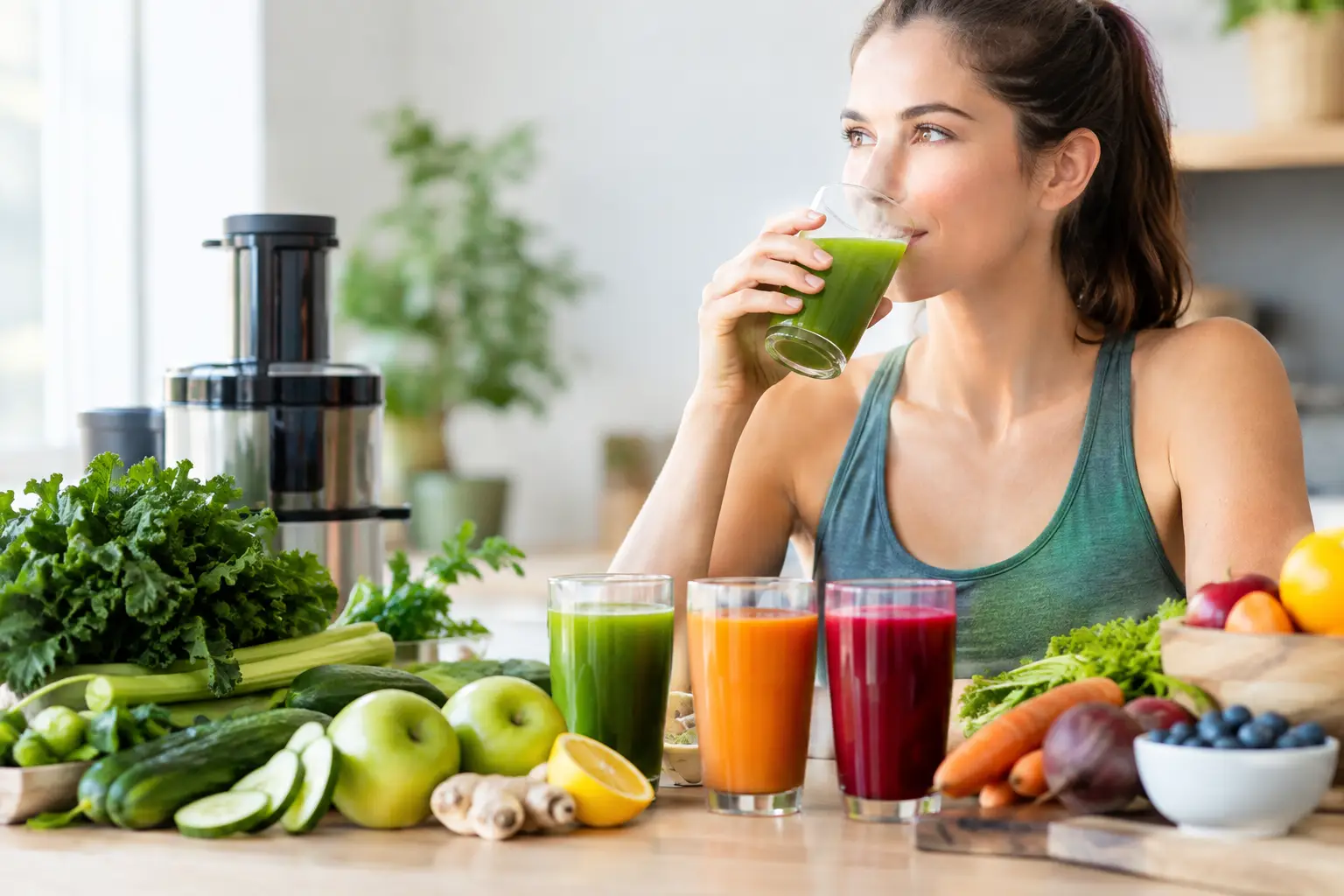

That mid-afternoon slump, the habit of eating on the go, the feeling that every meal is an afterthought – these are often the reasons people consider a sapkuur. Not because they need a dramatic fix, but because they want a clear pause: a week with more intention, more fruit and vegetables, and less room for the routines that leave them feeling flat.
A juice cleanse is not a medical treatment, and it does not remove toxins from your body. Your liver, kidneys, gut, lungs and skin already play vital roles in processing and removing waste. What a well-planned cleanse can offer is a structured change in your eating pattern, a high intake of plant foods and a useful opportunity to notice what influences your energy, appetite and daily choices.
Wat is een sapkuur?
A juice cleanse is a short, structured period in which you drink freshly made fruit and vegetable juices, often alongside water and herbal tea. Some people use it as a reset after a holiday or hectic period. Others choose it as a focused starting point for healthier routines around food, movement, sleep and stress.
The experience varies. Juices can provide vitamins, minerals and plant compounds from ingredients such as leafy greens, beetroot, carrots, cucumber, celery, citrus fruit and berries. Yet juicing removes most of the fibre that you would get from eating the whole fruit or vegetable. Fibre supports digestion, contributes to fullness and helps moderate the effect of naturally occurring sugars on blood glucose. That is why a cleanse is best viewed as a temporary practice, not a replacement for balanced meals over the long term.
It also matters what is in the bottle or glass. A day built mainly around fruit juice will feel different from one that includes plenty of vegetables, herbs and a considered balance of flavours. Quantity, variety and your own health needs all influence the experience.
What a juice cleanse may help you notice
The biggest value of a cleanse is often behavioural rather than magical. When you stop making constant food decisions, you create space to observe the habits usually running in the background.
You may notice how often you eat from boredom rather than hunger, how little water you normally drink, or how strongly poor sleep affects your cravings. You may also discover that preparing something colourful and nourishing changes the tone of your day. These are personal experiences, not guarantees, but they can be valuable information.
Many people report feeling lighter, more organised or more energised during a short cleanse. For some, the effect comes from temporarily reducing alcohol, highly processed snacks, large takeaway meals or irregular eating. Others feel tired, irritable or hungry, particularly in the first days. Both responses are possible. A cleanse is not a test of willpower, and feeling unwell is not proof that it is “working”.
Short-term weight changes can happen too, especially when your usual meals are replaced by lower-calorie drinks. But early changes on the scales commonly reflect shifts in fluid and stored carbohydrate as well as body fat. Sustainable weight management comes from what happens afterwards: regular meals, satisfying food, movement you can repeat and habits that fit real life.
How to prepare for a juice cleanse
A little preparation can make the difference between a calm reset and a week that feels like a battle. Rather than treating the night before as a last chance to overeat, begin simplifying your routine a few days ahead. Aim for regular meals centred on vegetables, fruit, protein-rich foods and high-fibre carbohydrates, and reduce alcohol if you drink it.
Think about your diary as well. A quieter week is often easier than one full of late dinners, travel and demanding social commitments. If possible, choose a period when you can prioritise sleep, gentle movement and a little time to reflect. You do not need perfect conditions, but realistic expectations help.
Hydration deserves attention. Drinking water throughout the day supports normal body functions, and starting well hydrated may help you distinguish thirst from hunger. Herbal tea can be a comforting addition if it suits you. Be cautious with caffeine: suddenly stopping several strong coffees a day can lead to headaches and fatigue, so reducing gradually beforehand may feel more manageable.
Is a juice cleanse right for you?
Not every wellness practice suits every person. If you are pregnant or breastfeeding, under 18, have diabetes, kidney disease, a history of an eating disorder, or take medication that is affected by diet, do not begin a cleanse without advice from a qualified healthcare professional. The same applies if you have a medical condition, are recovering from illness or surgery, or have specific nutritional requirements.
Even if you are generally healthy, pay attention to your body. Persistent dizziness, fainting, confusion, severe weakness, vomiting or any symptom that concerns you are reasons to stop and seek medical advice. A juice cleanse should never become a reason to ignore hunger, push through distress or punish yourself for eating.
For some people, a gentler food-focused reset is a better place to start. Adding more vegetables to meals, cooking at home for a week, taking a daily walk and eating without screens can create meaningful change without relying on an all-juice approach. It depends on your goals, your relationship with food and what you can sustain.
Managing hunger, cravings and low energy
Hunger is one of the most common worries, especially for first-timers. It helps to separate physical hunger from routine-based cravings. Physical hunger tends to build gradually and may come with low energy or difficulty concentrating. A craving can be more specific and sudden: the familiar urge for crisps while watching television or something sweet after dinner.
Neither response means you have failed. Pause, have water, and consider what else may be going on. Are you tired? Stressed? Avoiding a task? Simply missing the comfort of chewing? A short walk, a shower, an early night or a few quiet minutes can change the moment more than forcing yourself to carry on.
Keep movement gentle and responsive. Walking, stretching or easy yoga may feel supportive, while hard training sessions can be less comfortable when food intake is reduced. There is no prize for doing more. The purpose is to create a reset you can learn from, not to turn seven days into an endurance event.
The transition back to food matters most
The day after a cleanse is not a finish line. It is the point where you decide what to carry forward. Returning immediately to a large, rich meal may leave you uncomfortable and can make the whole experience feel disconnected from everyday life. Instead, reintroduce ordinary, nourishing meals gradually and pay attention to how you feel.
Whole foods should take centre stage again: vegetables, fruit, beans, lentils, wholegrains, yoghurt or other protein sources that suit you, nuts, seeds and healthy fats. These foods provide the fibre, protein and fats that juices alone do not supply in sufficient amounts for a long-term eating pattern.
Choose one or two changes that feel genuinely possible. Perhaps you prepare breakfast the night before, take a proper lunch break, keep a jug of water on your desk or make vegetables the starting point of your evening meal. Small promises kept repeatedly are more powerful than an ambitious plan abandoned by Thursday.
A structured reset can make the difference
Doing a juice cleanse without a framework can mean spending the week deciding what to make, when to drink it and whether every sensation is normal. Structure reduces that mental load. It also gives you a clearer way to connect the food element with rest, movement and reflection – the parts that often turn a short reset into lasting momentum.
The Juice Detox 7-day at-home programme is designed for that purpose, with six juices a day, 42 fresh recipes, practical guidance and space for meditation, movement and planning your next steps. It is not about being perfect for seven days. It is about using those days to reconnect with the habits that help you feel more like yourself.
Start with curiosity rather than pressure. Your body does not need a dramatic overhaul. It may simply need a few protected days in which healthy choices are easier to make – and a thoughtful plan for carrying that feeling into the week that follows.


 English
 Dutch
 German
 French
 Spanish
 Italian
Plaats een Reactie
Meepraten?Draag gerust bij!